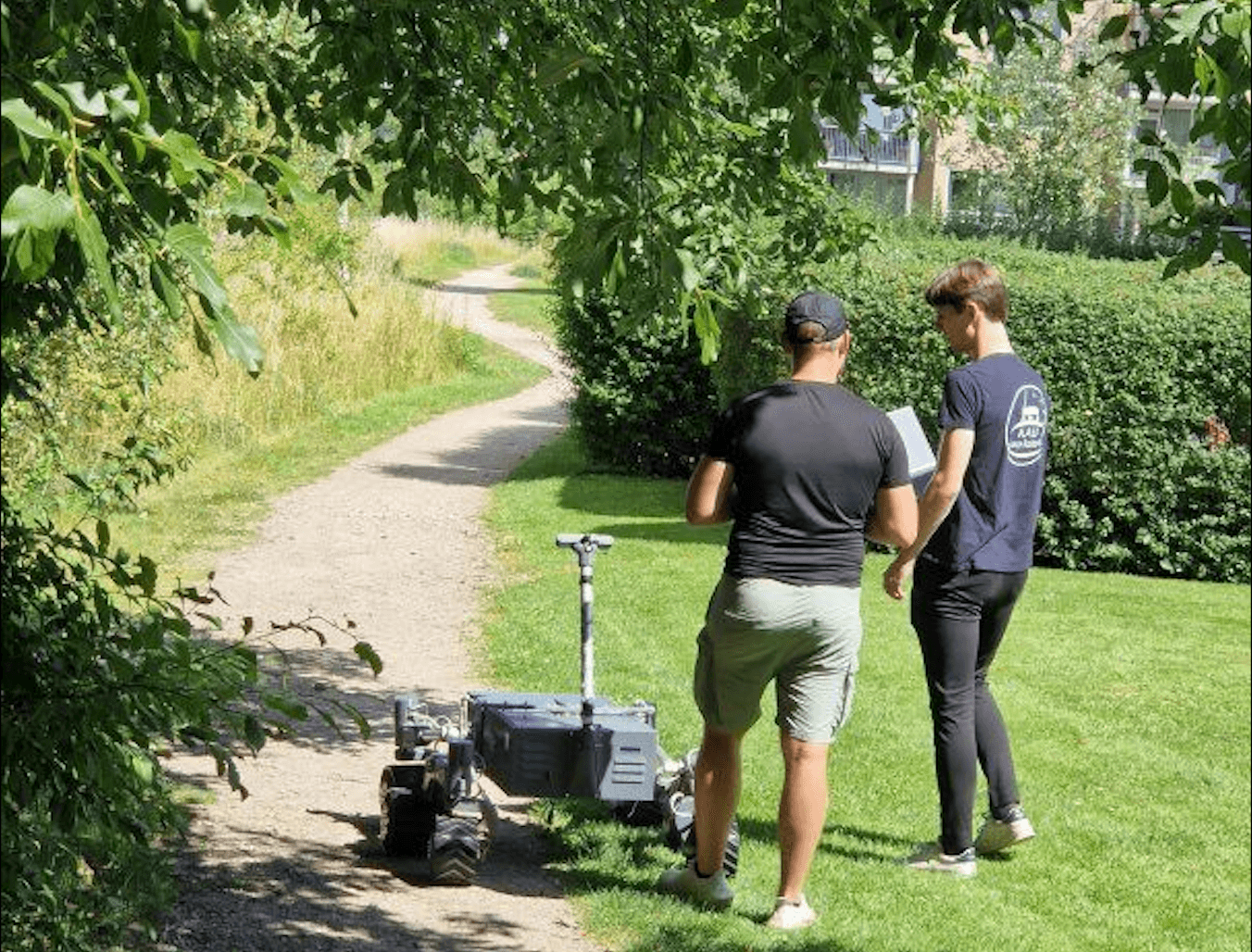
Prior to qualification, the team wrote a report explaining how their project meets several technical and safety requirements. In addition, they included a section on safety systems that contains a risk analysis for the entire system and subcomponents. The report also contains a description of the organization in the team, as well as a budget for things like development and equipment. A total of 69 teams submitted a report, with only 27 qualifying.
This is the first time that a Danish team is participating in the European Rover Challenge, which celebrates its 10th anniversary this year. In addition to the rover, they also built a drone that can communicate with the rover about any obstacles on the route. They have thus tried to simulate the communication between the real Mars rovers and helicopters.
"We are trying to work with some of the methods that are used in the space industry right now," says Simon Bøgh, Associate Professor.
The team is spending a large part of their summer holiday practicing and getting the final details in place, so they are completely ready to compete in Poland. Their rover will perform a number of tasks in a Mars yard including being able to plan a route, navigate in a control panel, construct things and collect soil samples.