Jump to content

News

When the system meets reality: A researcher's journey into the reality of migration

Published online: 19.11.2025

How do you ensure that migration agreements take into account the people they affect? Ahlam Chemlali has been working on this question for years, and recently she had the opportunity to bring her research right into the heart of the EU's political engine room.

By Line Nyrup Odgaard, AAU Communication and Public Affairs
Photo: Dicte Sønnichsen

Ahlam Chemlali has sat face to face with migrants who have fled their homes, torture survivors, smugglers, forensic scientists and diplomats – each with their own perspective on Europe's border agreements. She has made it her mission to understand how the EU's migration policy works in practice, far from the polished floors and political documents in Brussels. It is noteworthy that she – as a newly minted PhD – was invited as an expert to the EU's political engine room to present her critical research, an opportunity rarely given to early-career researchers.

People-centred research

Ahlam Chemlali's PhD project, done in a collaboration between Aalborg University and the Danish Institute for International Studies (DIIS), focuses on EU migration policy and its consequences – both intentional and unintended – for people outside Europe's borders. Her ethnographic approach takes her out into the field, meeting those who are the focus of her research. Her primary research site is North Africa, and she has done fieldwork in places like Tunisia and Libya. She has spoken to a number of different actors, all affected in different ways by the border agreements between the EU and the region.

With a past at the human rights organization DIGNITY – Danish Institute Against Torture, her research is based on many years of working with people exposed to severe trauma, including torture and war. She has followed many of them over time, and meeting these people has been crucial to her desire to delve deeper into the processes that create and sustain violence.

"This is exactly what made me delve deeper into the processes and the violence that occurs, to understand it and ultimately be able to prevent or minimize the risks people are exposed to. That’s probably my fundamental driving force: to use my research for something better, for change," she explains.

Ahlam Chemlali's background

Ahlam Chemlali is a postdoc in the Department of Politics and Society at Aalborg University. She took an unconventional path into research with a Master's degree in Health Sciences from the University of Copenhagen and almost ten years of experience in the field with the human rights organization DIGNITY – Danish Institute Against Torture. In DIGNITY, she worked closely with doctors, anthropologists, sociologists, economists and other professional groups, which has shaped her research method to be both practice-oriented and interdisciplinary.

Invitation to EU seminar

In October, Ahlam Chemlali was invited to present her research at an EU seminar in Brussels, organized by the Danish Institute for Human Rights and the Danish EU Presidency. The seminar focused on how human rights can be more effectively incorporated in migration and border agreements. Several of these agreements have faced criticism from human rights organizations as they often overlook serious consequences such as violence, abuse, and deaths among migrants.

"Critical research does not mean rejecting the agreements. It's about highlighting the points where adjustments are needed," explains Ahlam Chemlali.

She describes the experience in Brussels as both meaningful and motivating:

"It’s a positive thing to be invited to where the agreements are actually made, and to have the opportunity to point out how they can be improved. Being listened to means that research has a real role in practice and can help influence future agreements and policy."

According to Ahlam Chemlali, this shows that critical research can play a constructive role in the development of migration policy.

Research in dialogue with practice

The EU seminar brought together a wide range of actors from humanitarian organizations like the Danish Refugee Council and UNHCR to representatives from Frontex – the EU border and coast guard agency responsible for monitoring and coordinating the control of EU external borders – and civil servants in the EU system.

Ahlam Chemlali was the only researcher among the participants and saw it as an important opportunity to bring a research-based perspective into the conversations about migration and border agreements.

She emphasizes that presentations in political and practice-oriented forums require a different approach than in academia. According to her, it is about making the message tangible and relevant to those who work on policy and practice. At the same time, you avoid appearing judgmental.

According to the migration researcher, it is crucial to work together and point out how to improve existing agreements based on human rights and the human consequences they entail.

"It is also important that I always stick to the research and do it as objectively and professionally as possible, because so many emotions are always at stake in such topics," she elaborates.

In addition, Ahlam Chemlali also emphasizes the importance of dialogue, which became clear, for example, after the meeting with Frontex.

"Even if we don't agree, it's important to listen to each other and get different perspectives," says the researcher.
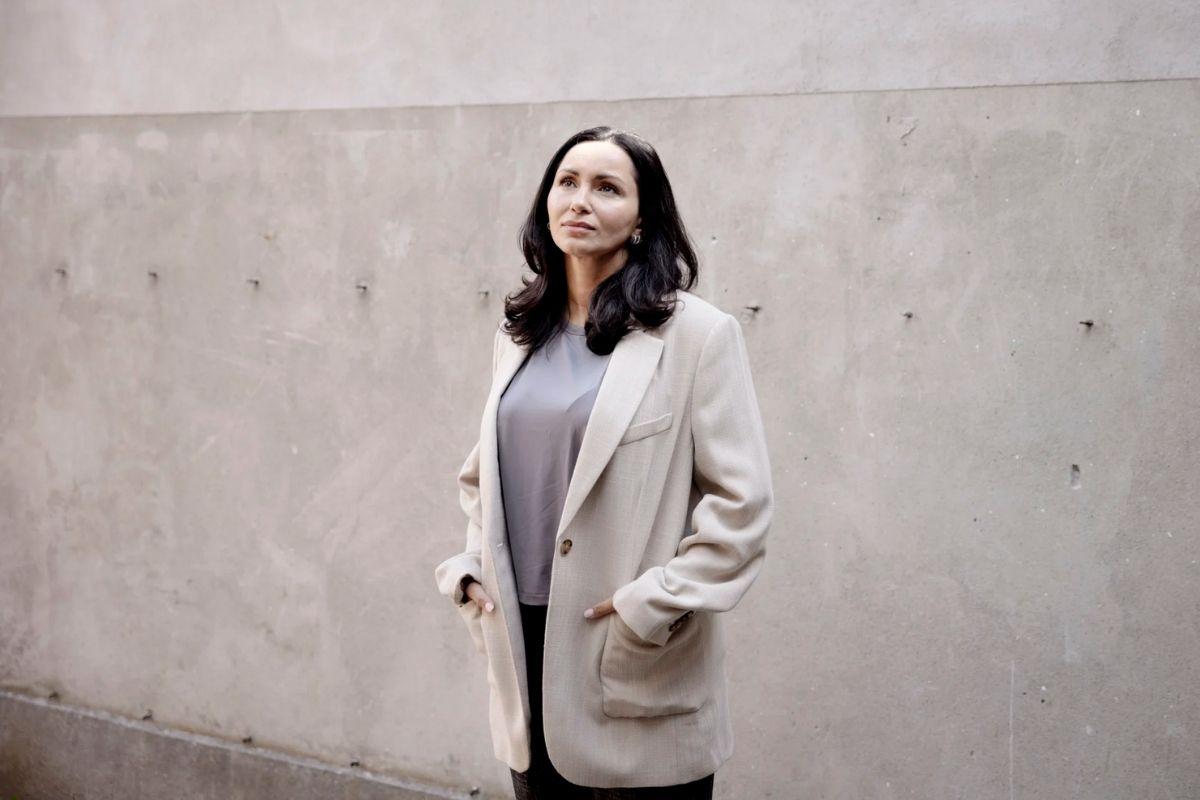
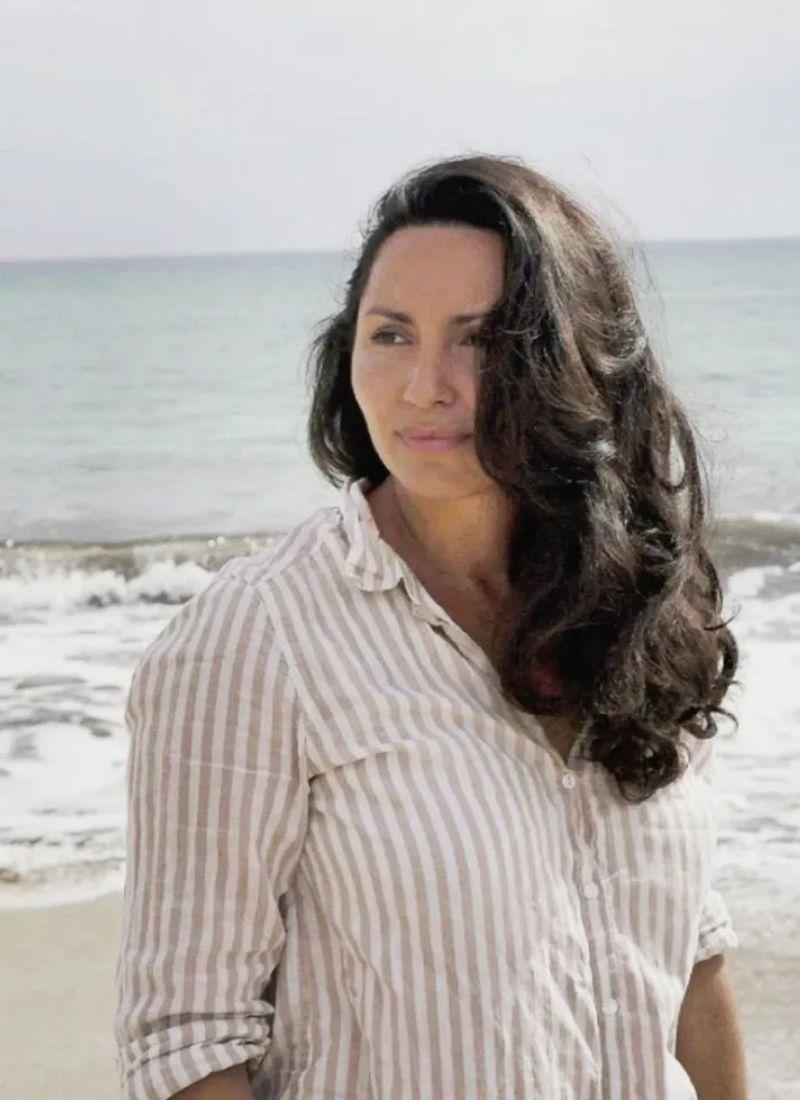
Ahlam Chemlali in Sfax, Tunisia, a hotspot where migrants cross the Mediterranean.

Ahlam Chemlali’s presentation received positive feedback. Her research perspective in the conversations generated great interest, even though her work points to critical aspects of the EU's externalizing of border control where the responsibility for dealing with migrants is increasingly shifted to countries outside Europe.

She emphasizes that the role of research is precisely to shed light on the risks and nuances that are often overlooked in the political debate where migration is quickly becoming a politicized and polarized topic. At the same time, she points out that EU actors discussing migration policy can often get technical and institutionally oriented, so it is valuable to bring research into this space.

Several participants showed interest in continuing the dialogue and networking around her work – an opportunity she sees as crucial for bridging the gap between academic knowledge and the political reality where migration agreements are actually designed.

Ahlam Chemlali's research has not only left its mark in academic circles, but has also been included in the public debate and mentioned in several media outlets. The experience of presenting her research at the EU's political centre has given her both recognition and new contacts. As a postdoc, she is now continuing to investigate border violence and life in transit in North Africa with the ambition of bringing the research into where decisions are made.

"As a researcher, it is crucial that your work not only appears in research articles, but also reaches those who can use it in practice and create change," she states.

Translated by LeeAnn Iovanni, AAU Communication and Public Affairs

Read also